The First Open-Access Digital Map of the World’s Languages
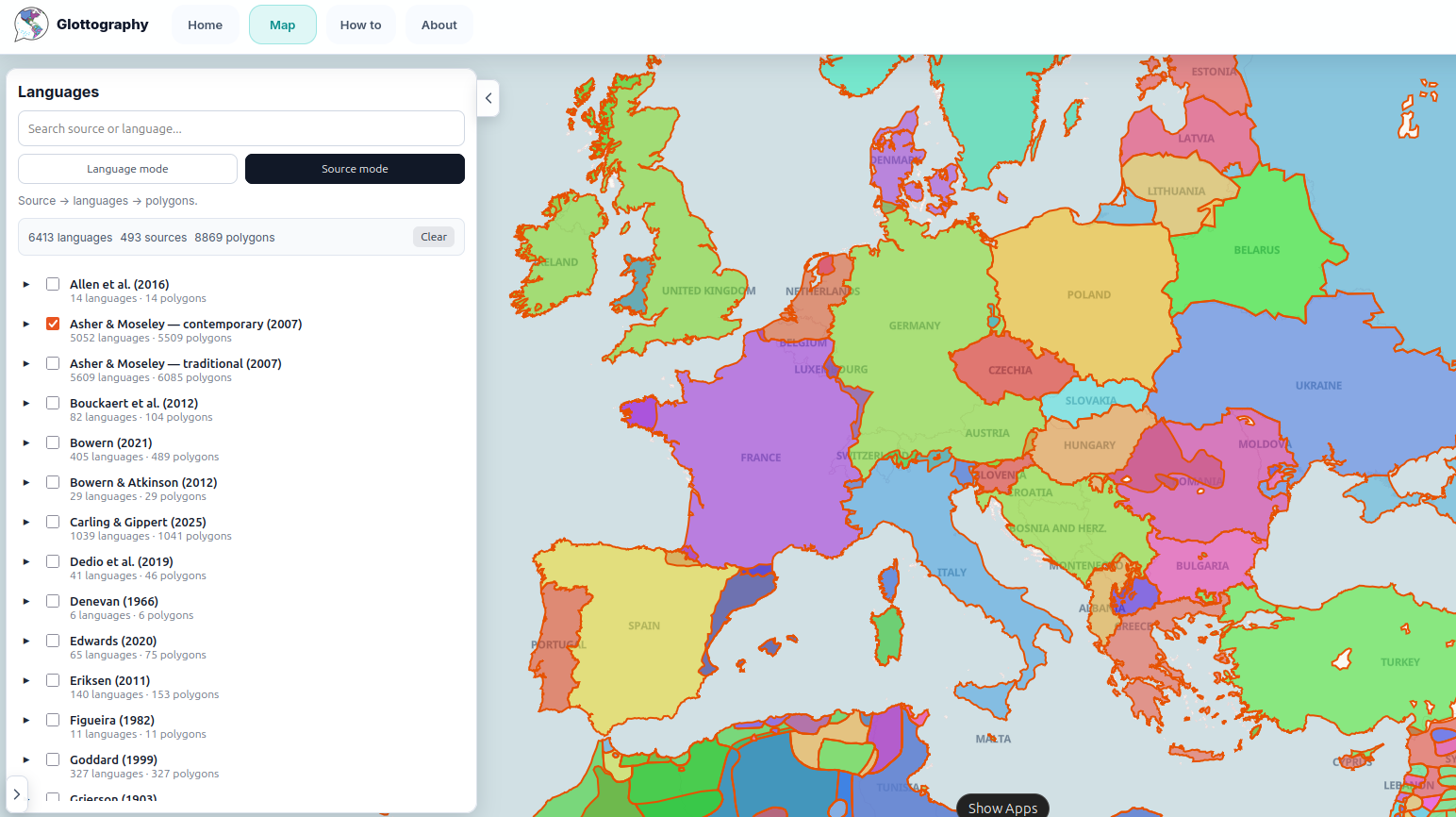
Researchers at the University of Zurich together with colleagues from Utrecht University, Leiden University, Max Planck Institute for Evolutionary Anthropology, and University of Turku launched Glottography, the first open-access platform for mapping the world’s languages, past and present.
Glottography brings together more than 10,000 digital geographic language areas, past and present, derived from maps and atlases. To build this resource, the team digitised hundreds of language maps from the scientific literature, many of which had previously been available only in print. The mapped areas were then linked to linguistic information, creating an accessible resource that is freely available to researchers and the public. Glottography accommodates multiple representations of the same language area, reflecting the fact that language boundaries can be subjective and contested. Its flexible framework also allows new areas to be added, enabling the resource to grow as new data and interpretations become available.
The Glottography dataset has been accessible since spring 2026, primarily to users with the technical skills needed to work with it. The new Glottography web map at https://www.glottography.org/, launched in October 2026, opens the dataset to a much wider audience through an interactive visual interface. Journalists, teachers, researchers, and members of the public can now explore where languages are and were spoken around the world, without needing specialist technical skills.