Chundra Cathcart
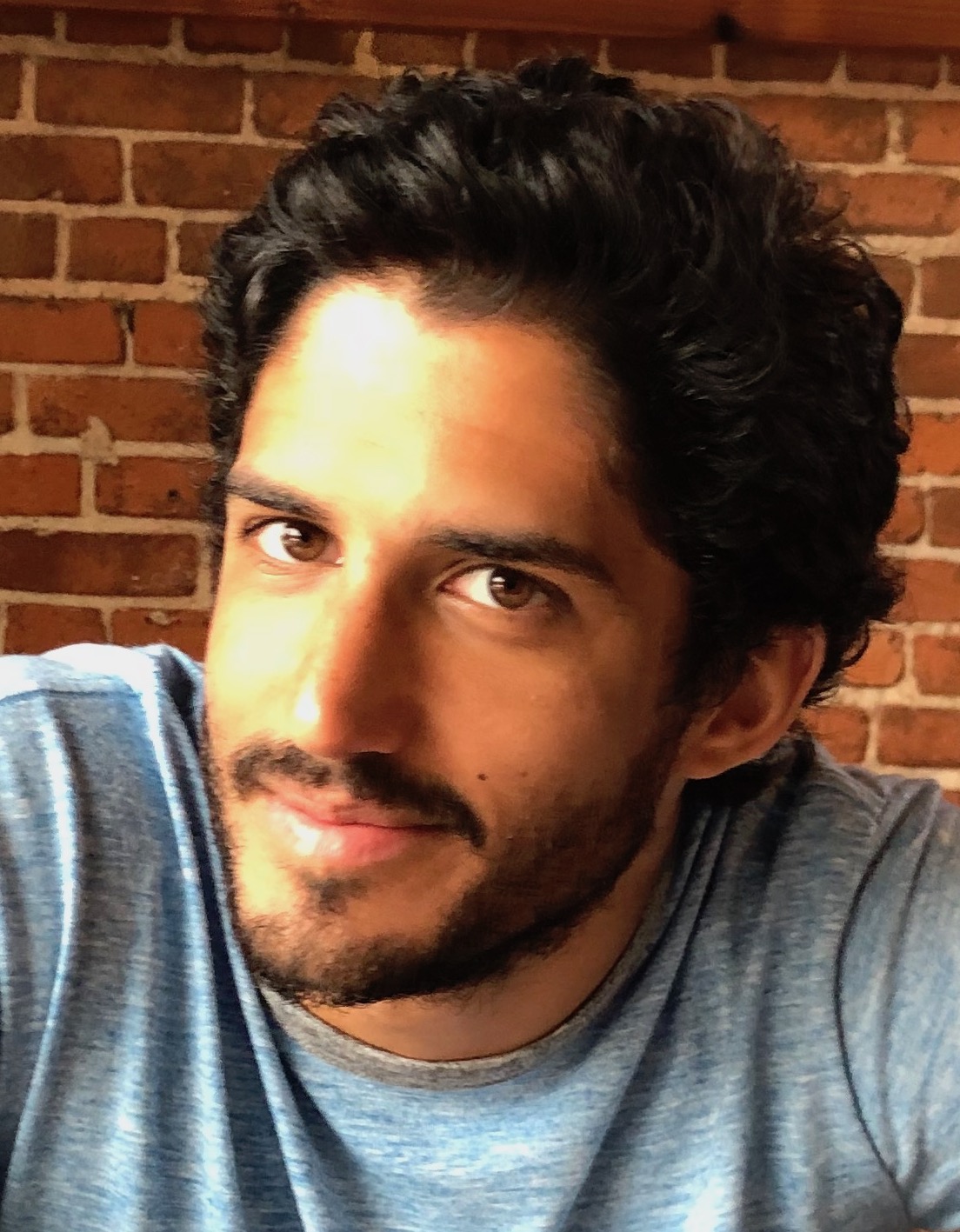
PD Dr. Chundra Cathcart
Senior Researcher (Oberassistent)
Distributional Linguistics Lab
Group Leader of
Quantitative Diachronic Linguistics Group
I am a diachronic linguist whose work has a quantitative and computational bent. My main interests concern sound change and morphosyntactic change. Broadly speaking, I am interested in the pressures that interact to shape the synchronic profiles of languages, with a focus on languages of Central, South and Southeast Asia. I use a wide range of tools in my approach to these issues. I use a wide range of quantitative and computational tools to investigate these issues, including Bayesian models and methods from deep learning, and seek to develop models that are flexible enough to address a wide range of questions of interest to diachronic linguists and linguists more generally.
For more information, please visit my personal website
Teaching
| V-Nr | Course | Start / End | Date | Lecturers | Room |
|---|---|---|---|---|---|
| 5456 |
06SE272-504a
|
from 15.09.2026
to 15.12.2026
|
Di 12:15-13:45 | Chundra Cathcart | AND-2-02 |
| 5436 |
06VL274-501a
|
from 16.09.2026
to 18.12.2026
|
Mi 12:15-13:45, Fr 12:15-13:45 | Silvia Brem Judith Maria Burkart Chundra Cathcart Paola Cerrito Nathalie Régine Giroud Rickenbacher Hans-Johann Glock Richard Hahnloser Lena Ann Jäger Sebastian Krapp Marta Manser John Mansfield Martin Meyer Andrea Migliano Kentaro Shimizu Sabine Stoll Simon William Townsend Paul Widmer Carolus Ph. van Schaik | AFL-E-022 |
ZORA Publication List
Download Options
Publications
-
Animal acoustic communication has a conserved optimal rhythm within the neural delta range PLoS Biology, 24, e3003798. https://doi.org/10.1371/journal.pbio.3003798
-
Investigating Lexical Change through Cross-Linguistic Colexification Patterns Language Dynamics and Change, 16, 1–30. https://doi.org/10.1163/22105832-bja10041
-
Complexity counts: global and local perspectives on Indo-Aryan numeral systems Journal of Cultural Cognitive Science, 10, 147–166. https://doi.org/10.1007/s41809-026-00197-x
-
Usage-based evolutionary models reveal context-specific word order change in Indo-European Language Dynamics and Change, 15, 1–35. https://doi.org/10.1163/22105832-bja10039
-
Good enough for Galton, and much more: commentary on “Replication and methodological robustness in quantitative typology” by Becker and Guzmán Naranjo Linguistic Typology, 29, 559–562. https://doi.org/10.1515/lingty-2025-0030
-
Outstanding problems in Persian historical phonology: toward a quantitative solution In A. Korangy & B. Mahmoodi-Bakhtiari (Eds.), The Handbook of Persian Dialects and Dialectology (pp. 149–175). Springer. https://doi.org/10.1007/978-981-99-8151-9_5
-
Linguistic evolution in time and space: Addressing the methodological challenges In L. Raviv & C. Boeckx (Eds.), The Oxford Handbook of Approaches to Language Evolution (pp. 391–421). Oxford University Press. https://doi.org/10.1093/oxfordhb/9780192886491.013.20
-
Beyond bigrams: call sequencing in the common marmoset (Callithrix jacchus) vocal system Royal Society Open Science, 11, 218–240. https://doi.org/10.1098/rsos.240218
-
Exploring the evolutionary dynamics of sound symbolism Proceedings of the Annual Meeting of the Cognitive Science Society, 1076–1083. https://escholarship.org/uc/item/3tc941m4
-
Finding proportionality in computational approaches to morphological change (XV). 83. https://doi.org/10.17617/2.3587960
-
Short vs long stem alternations in Romance verbal inflection: the S-morphome Transactions of the Philological Society, 122, 49–78. https://doi.org/10.1111/1467-968X.12271
-
Review of Frederik Hartmann: Germanic phylogeny Folia Linguistica Historica, 45, 325–330. https://doi.org/10.1515/flin-2024-2048
-
Multiple evolutionary pressures shape identical consonant avoidance in the world’s languages Proceedings of the National Academy of Sciences of the United States of America, 121, e2316677121. https://doi.org/10.1073/pnas.2316677121
-
Rate variation in language change: Toward distributional phylogenetic modeling In F. A. Karakostis & G. Jäger (Eds.), Biocultural Evolution: An Agenda for Integrative Approaches (pp. 179–202). Kerns Verlag. https://doi.org/10.51315/9783935751384.008
-
Paradigmatic heterogeneity and homogenization: probing Paul’s principle. In D. Kavitskaya & A. Yu (Eds.), The life cycle of language: past, present, and future (pp. 371–385). Oxford University Press. https://doi.org/10.1093/oso/9780192845818.003.0023
-
The evolutionary trends of noun class systems in Atlantic languages (A. Ravignani, R. Asano, D. Valente, F. Ferretti, S. Hartmann, M. Hayashi, Y. Jadoul, M. Martins, Y. Oseki, E. D. Rodrigues, O. Vasileva, & S. Wacewicz, Eds.; pp. 624–631). Max Planck Institute for Psycholinguistic.
-
Reconstructing the origins of language families and variation In A. Lock, C. Sinha, & N. Gontier (Eds.), The Oxford Handbook of Human Symbolic Evolution (p. online). Oxford University Press. https://doi.org/10.1093/oxfordhb/9780198813781.013.34
-
Dialectal layers in West Iranian: A hierarchical dirichlet process approach to linguistic relationships Transactions of the Philological Society, 120, 1–31. https://doi.org/10.1111/1467-968x.12225
-
The evolution of similarity avoidance: a phylogenetic approach to phonotactic change Proceedings of the Annual Meetings on Phonology, online. https://doi.org/10.3765/amp.v10i0.5434
-
Decoupling Speed of Change and Long-Term Preference in Language Evolution: Insights From Romance Verb Stem Alternations Proceedings of the Joint Conference on Language Evolution (JCoLE), Kanazawa. https://doi.org/10.17617/2.3398549
-
Reconstructing the evolution of Indo-European grammar Language, 97, 561–598. https://doi.org/10.1353/lan.0.0253
-
Evolutionary dynamics of Indo-European alignment patterns Diachronica, 38, 358–412. https://doi.org/10.1075/dia.19043.car
-
Disentangling dialects: a neural approach to Indo-Aryan historical phonology and subgrouping In R. Fernández & T. Linzen (Eds.), Proceedings of the 24th Conference on Computational Natural Language Learning (pp. 620–630). Association for Computational Linguistics. https://www.aclweb.org/anthology/2020.conll-1.50.pdf
-
Numeral classifiers and number marking in Indo-Iranian: A phylogenetic approach Language Dynamics and Change, 11, 273–325. https://doi.org/10.1163/22105832-bja10013
-
Linguistic stability and change under small-scale egalitarian language contact: a mixture model approach (S. Denison, M. Mack, Y. Xu, & B. Armstrong, Eds.; pp. 3109–3115). Cognitive Science Society. https://cognitivesciencesociety.org/cogsci20/papers/0776/0776.pdf
-
In search of isoglosses: continuous and discrete language embeddings in Slavic historical phonology In G. Nicolai, K. Gorman, & R. Cotterell (Eds.), Proceedings of the 17th SIGMORPHON Workshop on Computational Research in Phonetics, Phonology, and Morphology (pp. 233–244). Association for Computational Linguistics. https://doi.org/10.18653/v1/2020.sigmorphon-1.28
-
A probabilistic assessment of the Indo-Aryan Inner–Outer Hypothesis Journal of Historical Linguistics, 10, 42–86. https://doi.org/10.1075/jhl.18038.cat
-
Toward a deep dialectological representation of Indo-Aryan In M. Zampieri (Ed.), Proceedings of the Sixth Workshop on NLP for Similar Languages, Varieties and Dialects (pp. 110–119). Association for Computational Linguistics. https://doi.org/10.18653/v1/W19-1411
-
Gaussian Process Models of Sound Change in Indo-Aryan Dialectology 254–264. https://www.aclweb.org/anthology/W19-4732.pdf
-
Diachronic Atlas of Comparative Linguistics (DiACL)—A database for ancient language typology PLoS ONE, 13, e0205313. https://doi.org/10.1371/journal.pone.0205313
-
Modeling linguistic evolution: a look under the hood Linguistics Vanguard, 4, n/a. https://doi.org/10.1515/lingvan-2017-0043
-
Areal pressure in grammatical evolution: An Indo-European case study Diachronica, 35, 1–34. https://doi.org/10.1075/dia.16035.cat
-
Vedic Post-Lexical Retroflexion: Opacity and Diachrony 50th annual meeting of the Chicago Linguistic Society, Chicago.